

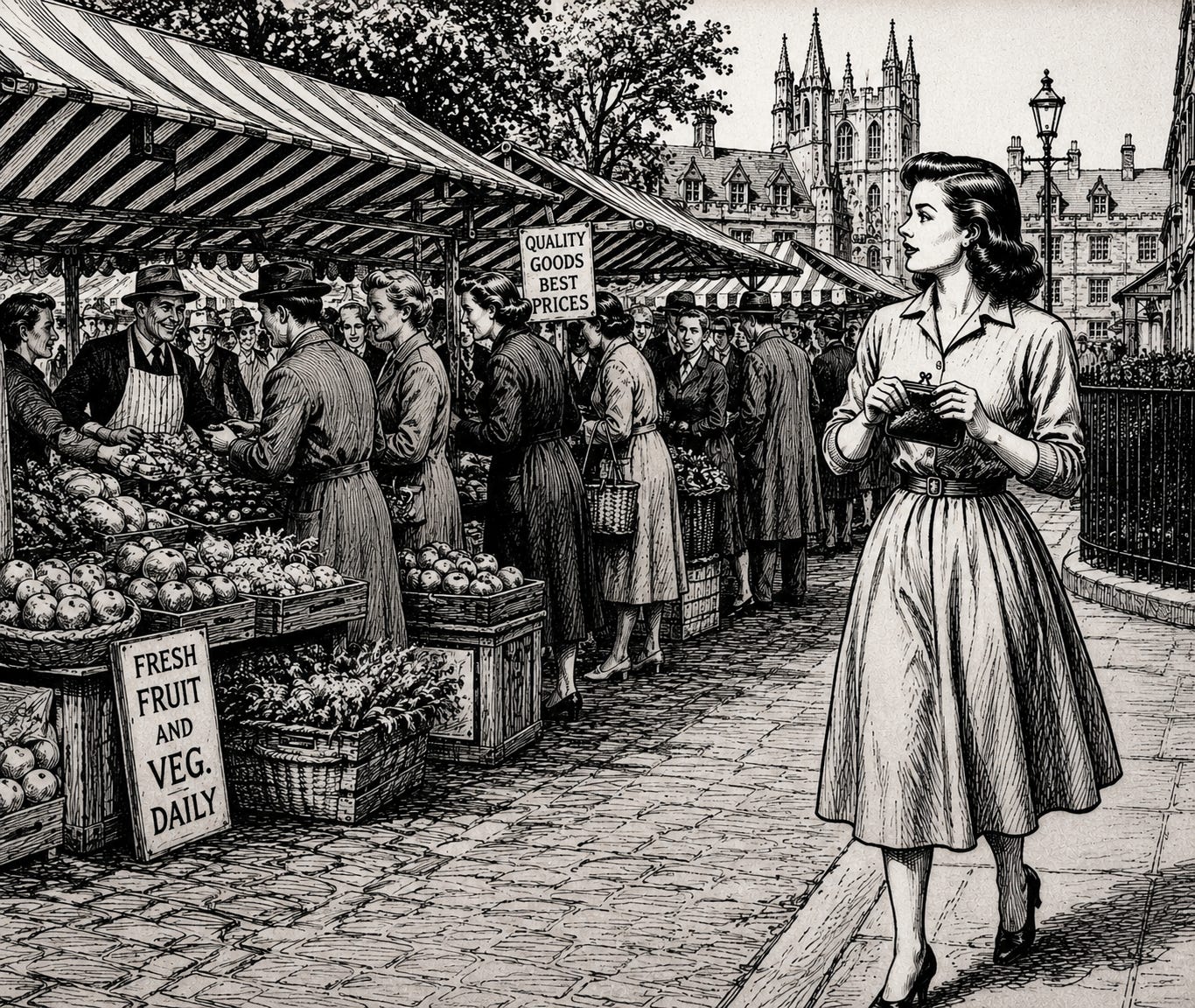
In this article I use money and currency interchangably - don’t get your knickers in a twist. I also say Hoover instead of Vacuum Cleaner too!
Excess
The path of money for people is typically the following two stages - First you buy things that you need. Food, housing, healthcare, transport and so on. Then anything left over, you might treat yourself and save or grow the rest.
Treating yourself and indulgences are down to an individual’s preferences. The individual might like horses, stamp collecting, 18th Century steins from Germany. The point is that these preferences are unique to that individual’s perception and may not valued by others.
Alternately, any surplus money could be stored or grown.
So - Do you buy assets that you think will maintain their value/grow or do you buy assets that you think others think will maintain their value/grow?
Coincidence of Wants
Coincidence of Wants is the term used in Economics to describe when Person A values the item that Person B has more than their own item. And where Person B values Person A’s item more than their own. At the same time and the same place.
When you think about the probabilty of someone wanting to swap a rate German stein for 10 sacks of horse feed at the same time in the same place. It is quite unlikely! It is understandable that the system of barter and direct exchange fizzled out quickly in favor of a unit of abstraction - currency.
Currency affords us that abstraction of value that allows us to swap Steins for horse feed at midnight, across the globe.
Notably - abstraction, liquidity and trust are some of key things to look for in jumping in and out of a transaction.
Holding Cash
Cash is the canonocial example of abstraction, liquidity and high trust, however it comes with a destructive side effect.
Holding cash long term will destroy wealth due to the Debt Based Fiat System - meaning that whenever the ruling party issues debt or prints money your wealth gets eroded.
Therefore you really might only consider being in cash for a short term period, but this is risky as you have no control over when cycles peak and trough.
When you are in cash, you are exposed to active currency debasement as well as opportunity cost of not being invested. So ~5% currency debasement coupled with the cost of not being in a risk free Tresury Bill for example of 5% is effectively a -10% yield.
S&P 500
The S&P 500 is where the Flock Gathers.
It is high trust, liquid and doesn’t have the erosion of wealth that holding cash has.
In 2026, it is in mainstream knowledge and well established as being the defacto place to store excess value to maintain wealth and to grow.
Picking individual stocks is extremely hard. Each individual stock is a market within itself. The aggregate of stocks acts as a common, larger market providing more liquidity and awareness. Plus it reduces risk by spreadking across a wider surface.
Going back to our earlier question - this is the place where other people think it will grow.
Warren Buffett
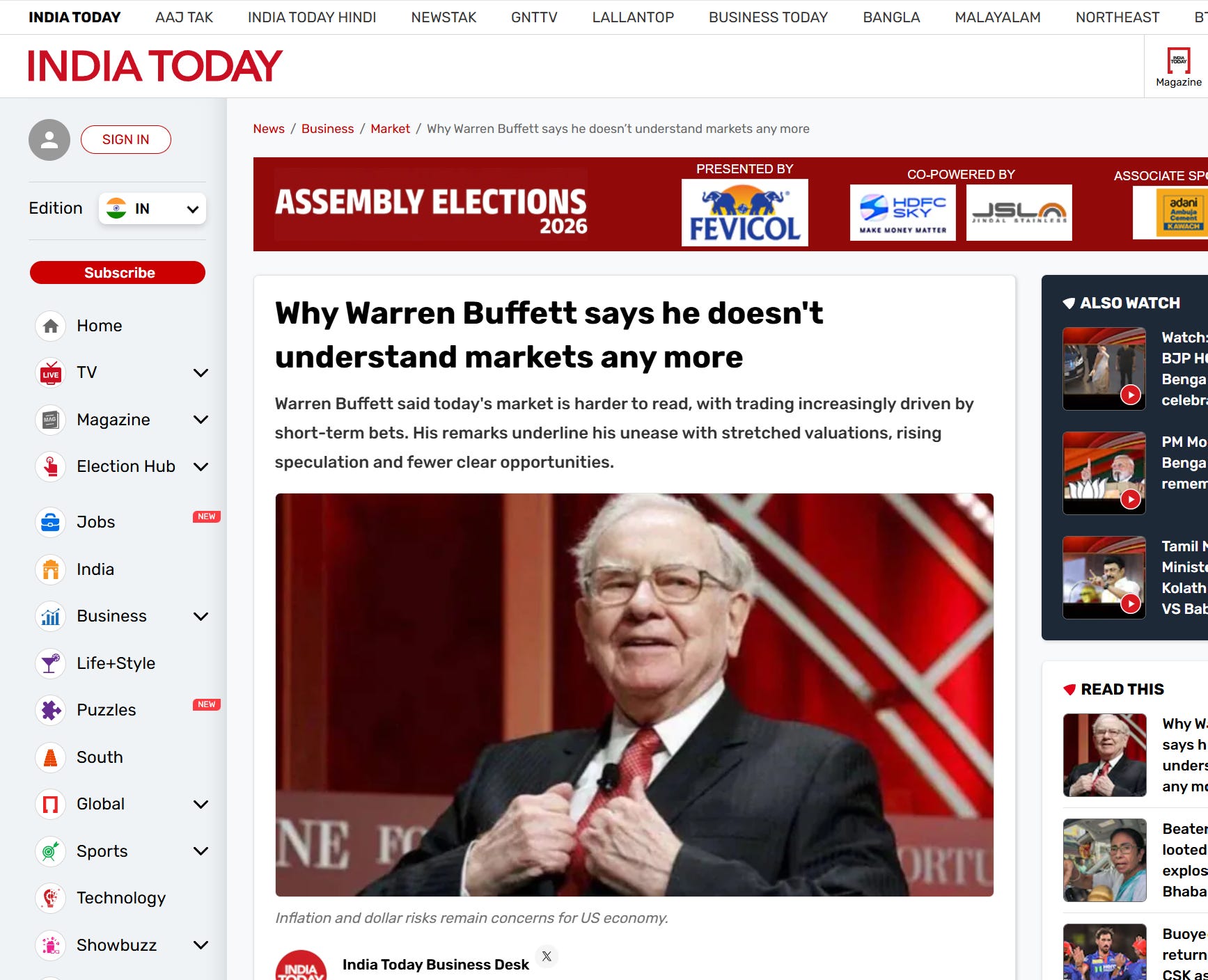
Warren Buffett recently has been mentioning that he doesn’t understand the markets any more with such high valuations and rampant speculation.
So is he following the flock?
Absolutely not - he’s sitting on a TON of cash. ~$400 Billion USD
It takes 2
So why would we not copy the world renowned Warren Buffett and sit in cash?
Well the only reason to do that would be to sell when things are high and to buy in low. And given that buying individual stocks is extremely hard, we’d be aiming to sell out of the S&P 500 when its high and buy in low.
However -
Value cannot exist without an exchange between two parties. Person A has to value Person B’s thing more than their own thing. At the same time Person B has to value Person A’s thing more than their own thing.
If they both had the same thing, no perceived value would be present.
You need two different things to exist before value can be manifested.
This in math is known as a Division operator or a Ratio. It is a comparison between two items.
5/5 = 1. 100/100 = 1.
Jumping out of the S&P 500 at some point and jumping in at some point implies we can measure perceived value at two different measurements. Yet comparing the same item to the same item is impossible.
The only avenue for value comparison is two distinct things. Or in investing, two different market cycles. Lets say Gold and Oil for example.
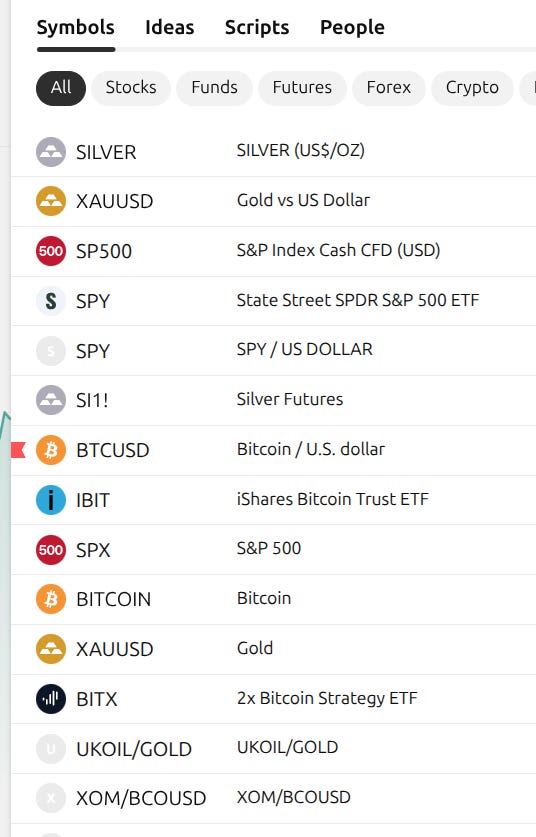
Looking at any trading/investing platform - the first class citizen of any platform is pairs (because value cannot exist without 2). See the image below. Each is a pair.
A misconception is that it is a single thing. Anything that isn’t explicity called out at as a pair is implicity a pair against the USD. E.g. S&P 500 below is S&P 500 divided by the USD.
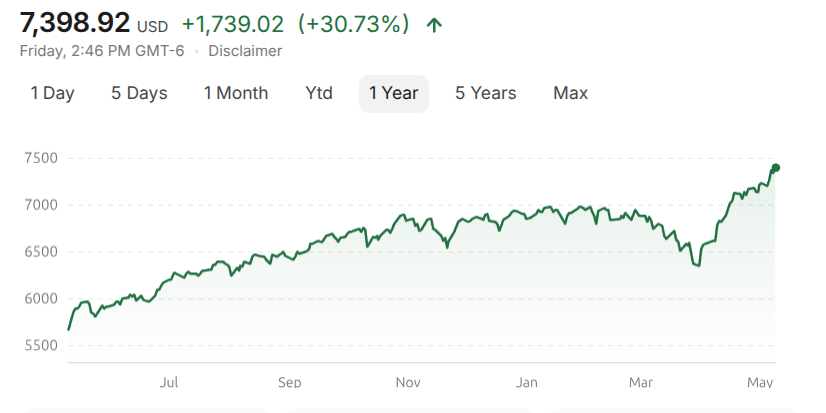
A stock chart is a visual representaton of the ratio over a period of time. Data points of one divided (numerator) divided by the other data point (denominator).
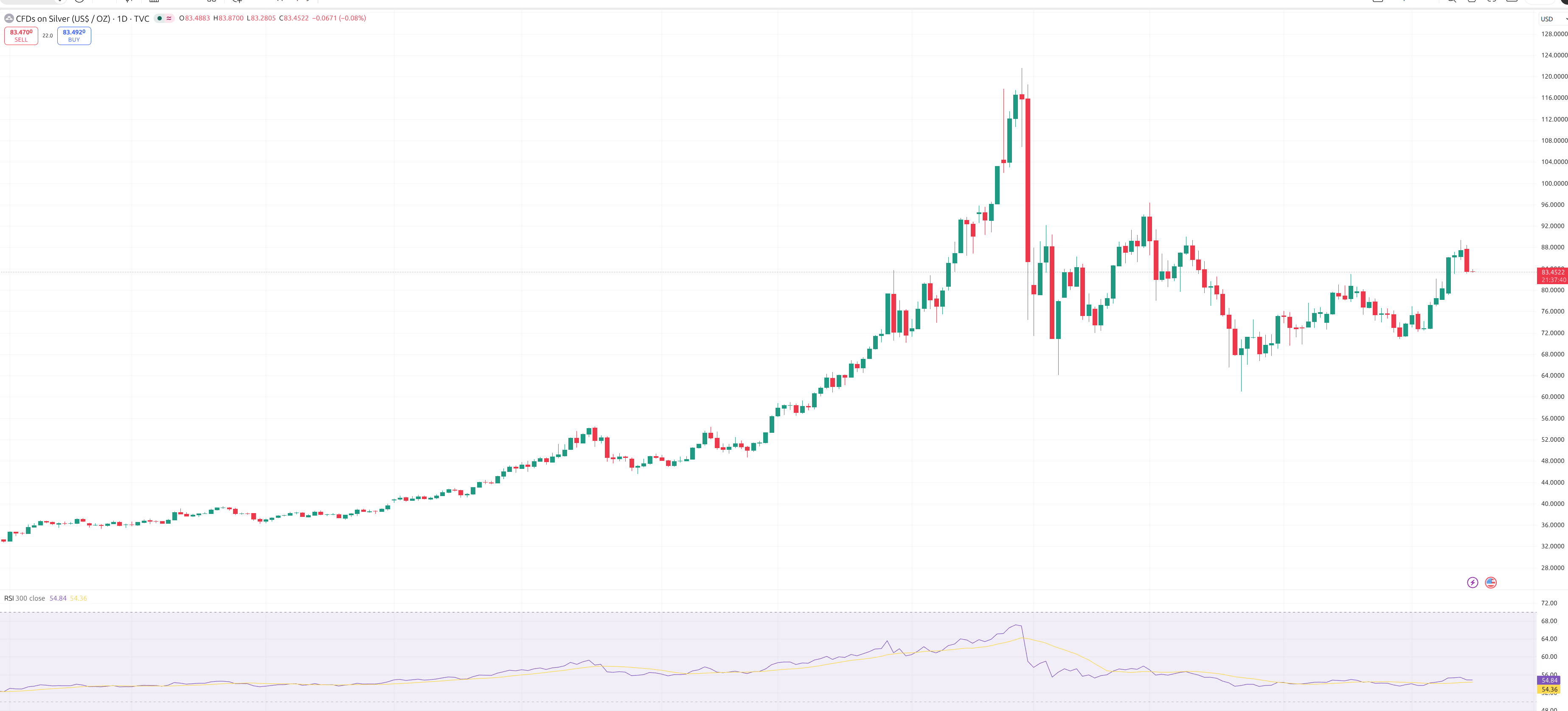
Buffett can pick stocks. 99% can’t. Given we are unable to compare 2 things - this is not a strategy of reality.
Stay Close To The Flock - Until Asymmetry
I have even experimented with this false reality of above. Guess what - it doesn’t work.
As an investor - Stay with the Flock until you see Asymmetry elsewhere. Know there are an unmeasurable amount of markets that you should keep abreast of.
Gold, Silver, Bitcoin, Oil, Commodities, Real Estate, Emerging Markets and so on.
Don’t hold your wealth with 20,000 Beer Steins - people wont want to exchange anything for them. Keep it with the flock until you see asymmetry, then pounce.
Gold market might be extremely low compared to your market of S&P 500. If gold can explode upwards 2-3x - that could well be a sign to move!